
What Is Gospel Music? Origins, Elements and Why It Endures
When I am asked to define gospel music, I often hesitate to offer a simple genre label because it is fundamentally a living, breathing testimony expressed through song. Over my years researching sacred music history and analyzing its cultural footprint, I have come to see gospel as the emotional bedrock of American popular music. It is a genre defined not merely by chord progressions or vocal techniques, but by an unshakeable message of hope, divine redemption, and collective resilience.
From the plantation work songs and spirituals of the 19th century to the polished global worship movements of today, gospel music has continuously evolved while retaining its sacred core. In this comprehensive guide, we will explore the historical birth of the genre, the foundational role of pioneers like Thomas A. Dorsey, the musical elements that define its signature sound, its family tree of subgenres, and its staggering influence on soul, R&B, and rock and roll. Whether you are a lifelong choir member or a curious newcomer, this deep dive will illuminate why gospel music remains an enduring global power.
Table of Contents
- Defining Gospel Music: More Than Just a Genre
- The Historical Birth of Gospel Music in the Early 20th Century
- Thomas A. Dorsey and the Architects of Sacred Sound
- Core Musical and Cultural Elements of Gospel
- The Gospel Family Tree: Exploring Subgenres and Styles
- Gospel’s Profound Impact on Soul, R&B, and Rock
- The Global Reach and Modern Renaissance of Gospel
- Essential Gospel Music Glossary: Key Terms Explained
- Conclusion: Why Gospel Music Will Never Fade
- Frequently Asked Questions
Defining Gospel Music: More Than Just a Genre
At its core, the word “gospel” derives from the Old English term “godspell,” which translates directly as “good news.” Musically, gospel music is an African American religious musical art form that originated in the late 19th and early 20th centuries, combining Christian hymnody with African rhythmic and vocal traditions. I have always maintained that what separates gospel from other vocal genres is its uncompromising commitment to a spiritual message.
Unlike secular pop music, where emotional expression is often centered on romantic love or personal ambition, gospel music is anchored in transcendent faith. The music serves as a vehicle for worship, prayer, communal solidarity, and spiritual encouragement. Even when performed on secular concert stages, the sacred intent remains palpable in the singer’s vocal delivery.
Understanding this distinction is vital for appreciating how gospel functions within modern culture. As I noted in my study on the essence of contemporary gospel music, the genre has always merged deep spiritual authenticity with artistic innovation. It is both a sacred ministry for believers and an extraordinary artistic achievement that commands respect worldwide.
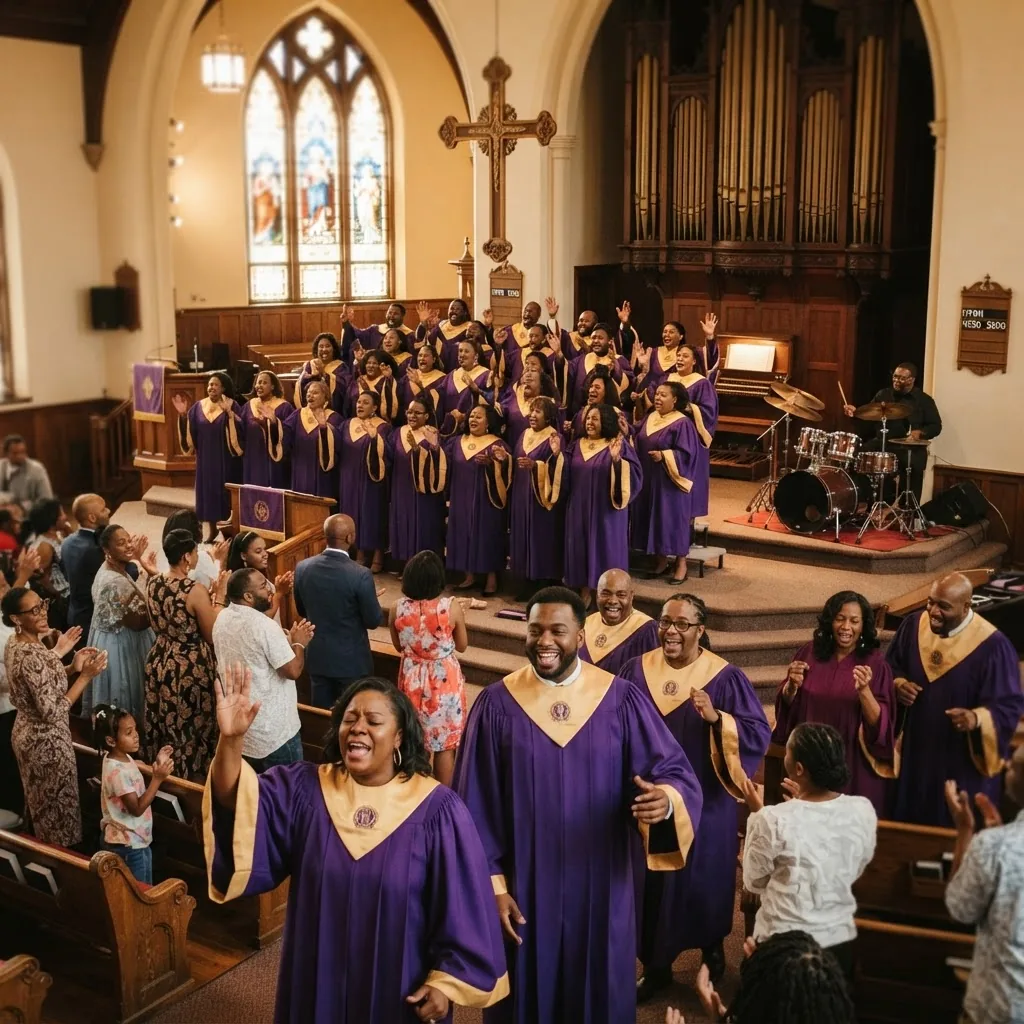
Moreover, gospel music is inherently participatory rather than passive for the listener. Whether in a rural storefront church or a modern megachurch, the music invites everyone present into the experience through handclaps, verbal affirmations, and shared vocal responses. It transforms an audience into a unified community of worshipers bound together by song.
I often remind listeners that gospel music is also a historic testament to human endurance. Created by communities navigating deep social adversity, every vocal line carries the weight of history and the triumph of hope. It is a musical language where pain and joy exist side by side in perfect harmony.
The Historical Birth of Gospel Music in the Early 20th Century
To understand where gospel music began, we must trace its roots back to African American Negro Spirituals and work songs created during the era of chattel slavery. These early songs served a double purpose, functioning both as expressions of deep Christian faith and as secret coded communications regarding physical freedom. Historical preservation records documented by the Library of Congress show how these spirituals formed the foundational DNA of American sacred music.
Following the Reconstruction era and the Great Migration of the early 20th century, millions of African Americans moved from the rural South to Northern urban industrial centers such as Chicago, Detroit, and Philadelphia. With this massive population shift came a blending of rural Southern folk traditions with urban instrumental styles. In city churches, traditional European hymns were infused with blues scales, syncopated piano rhythms, and dramatic vocal improvisation.
The Azusa Street Revival of 1906 in Los Angeles also played a pivotal historical role in shaping early gospel aesthetics. This Pentecostal movement emphasized spiritual enthusiasm, spontaneous vocal expression, handclaps, and rhythmic freedom in worship. These holiness church traditions broke away from rigid classical hymnody, encouraging singers to express their faith with raw emotional energy.
During the 1920s, street evangelists and sanctified church singers began recording sacred music for commercial record labels. Artists like Sister Rosetta Tharpe and Arizona Dranes began incorporating ragtime piano and electric guitar into church services, sparking intense debate over sacred boundaries. These early recordings laid the groundwork for a distinct commercial and spiritual genre that would soon sweep across the nation.
This period marked the transition from informal congregational singing to structured gospel compositions written specifically for choir directors and soloists. The merging of sacred text with urban blues sensibility created an entirely new soundscape. It was within this dynamic atmosphere that modern gospel music was officially born.
Thomas A. Dorsey and the Architects of Sacred Sound
No discussion of gospel origins is complete without focusing on Thomas A. Dorsey, universally celebrated as the “Father of Gospel Music.” Before devoting his life to sacred music, Dorsey was a prominent blues pianist known as “Georgia Tom,” performing alongside blues legends like Ma Rainey. In the late 1920s, after experiencing profound personal tragedy, Dorsey redirected his musical gifts entirely toward the sanctuary.
Dorsey revolutionized sacred music by combining the structure of Christian hymns with the raw emotional chord progressions of the blues. He composed enduring masterworks such as “Precious Lord, Take My Hand” and “Peace in the Valley,” establishing a publisher’s network to distribute gospel sheet music nationwide. I frequently remind music students that Dorsey did not just write songs; he built the economic and institutional foundation of gospel publishing.
Alongside Dorsey, visionary leaders like Sallie Martin and Willie Mae Ford Smith helped organize the National Convention of Gospel Choirs and Choruses in 1933. Sallie Martin’s sharp business acumen ensured that Dorsey’s sheet music reached churches across the country, creating a sustainable living for sacred composers. Their combined efforts elevated gospel music from informal church singing into a respected, structured national industry.
Willie Mae Ford Smith, a master vocal strategist, trained generations of gospel soloists in phrasing, breath control, and emotional storytelling. She emphasized that a gospel singer must “line out” the song so that every word reaches the listener’s heart with clarity. Her pedagogical work established high standards for sacred vocal technique that endure to this day.
In the mid-20th century, Reverend James Cleveland further refined choral gospel by founding the Gospel Music Workshop of America (GMWA) in 1967. Cleveland introduced complex choir arrangements, dynamic vocal swells, and call-and-response dynamics that defined the golden age of gospel choirs. His work ensured that gospel music maintained its high standard of musical excellence for future generations.
Core Musical and Cultural Elements of Gospel
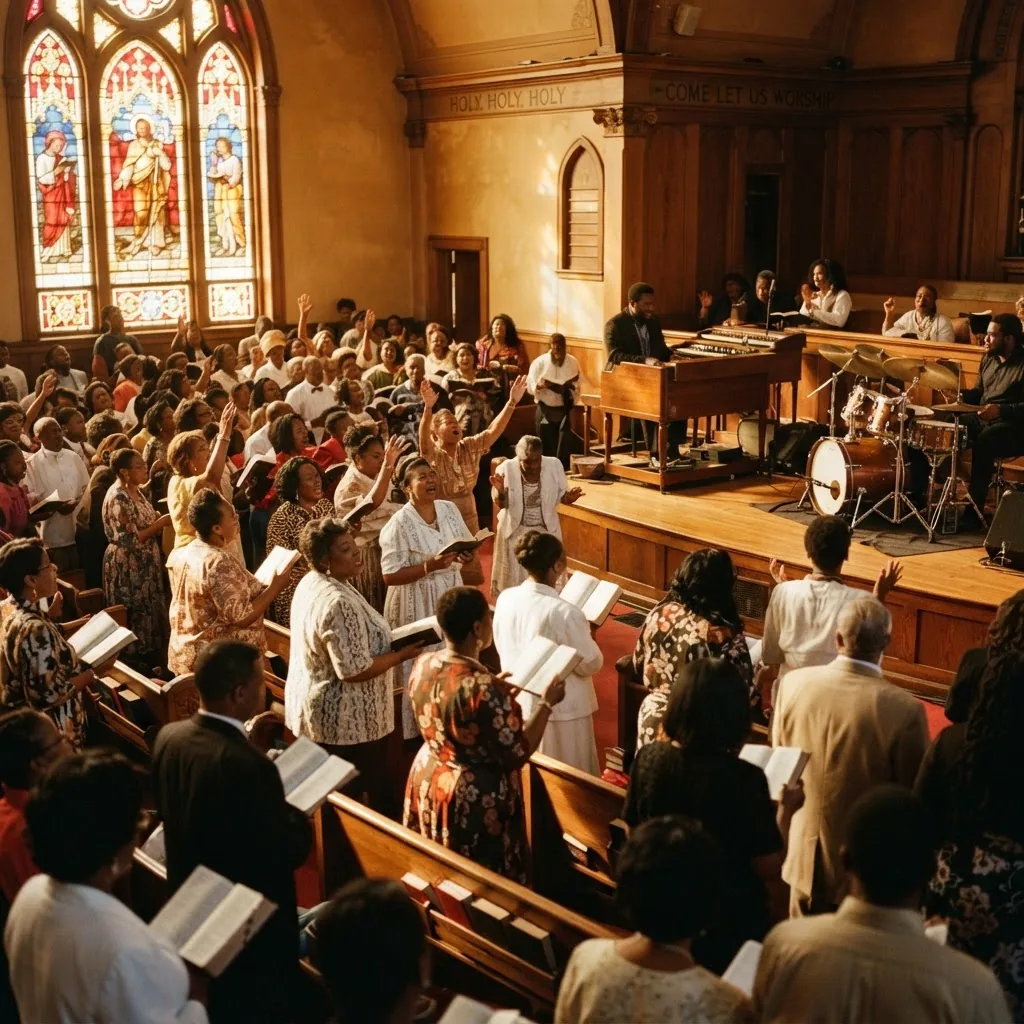
While gospel music encompasses dozens of subgenres, several foundational musical and cultural elements define its unmistakable sound across all eras. Recognizing these core techniques allows listeners to appreciate the profound craftsmanship behind every performance. When I analyze a gospel arrangement, I look for how these structural elements interact to create emotional momentum.
Call and Response Dynamics
Call and response is an ancient African musical tradition where a lead vocalist or preacher offers a musical statement (“call”), and the choir or congregation immediately answers with a harmonic phrase (“response”). This dynamic creates an ongoing dialogue between the leader and the community, ensuring that no one remains a passive spectator. It builds communal intimacy and heightens spiritual engagement throughout the song.
This interactive structure allows the lead singer flexibility to improvise over the steady harmonic foundation provided by the choir. As the energy increases, the responses often become shorter, punchier, and more syncopated. It creates an escalating wave of sound that pulls the listener directly into the experience.
The Golden Role of the Choir
The choir is the rhythmic and harmonic engine of traditional and contemporary gospel music alike. Divided typically into soprano, alto, and tenor sections (and occasionally bass), gospel choirs utilize dense chord voicings, extended modulations, and staggering volume dynamics. The collective vocal power of a fifty-voice choir creates a sonic wall that can fill the largest cathedral with energy.
Gospel choral arrangements often incorporate blue notes, passing chords, and unexpected key changes that build emotional height. Choir members sing with full chest voice and vibrant resonance, producing a unified timbre that is instantly recognizable. It is a monument of collective vocal artistry.
The Hammond B3 Organ and Leslie Speaker
It is impossible to separate the history of gospel music from the distinctive, swirling sound of the Hammond B3 organ paired with a rotating Leslie speaker cabinet. Introduced to churches in the 1930s as an affordable alternative to pipe organs, the B3 became the quintessential voice of gospel worship. Its ability to produce warm sustained chords, percussive drawbar clicks, and screaming pitch-bends gives gospel its signature warmth and emotional urgency.
Organists in gospel settings act as musical directors, underpinning the preacher’s cadence and guiding choir transitions. By manipulating the Leslie speaker’s horn speed from slow chorale to fast tremolo, the organist creates dramatic atmospheric shifts. The instrument remains an essential heart of the sanctuary sound.
The Vamp and Shout Ring Dynamics
The “vamp” is a short, repeated chord progression or vocal phrase played toward the climax of a gospel song. During a vamp, the lead singer improvises high-register runs while the choir repeats an unshakeable rhythmic phrase, building dynamic tension to a peak. This technique frequently leads into a “praise break” or shouting ring, where the rhythm section plays rapid syncopated grooves while congregants celebrate in spirit.
The vamp provides a structured container for spontaneous spiritual and musical expression. Musicians adjust their dynamics in real time based on the room’s emotional energy, extending the section as needed. It represents one of the most exciting compositional devices in all of modern music.
The Gospel Family Tree: Exploring Subgenres and Styles
As gospel music grew over the decades, it branched into distinct subgenres, each reflecting the culture, technology, and musical trends of its era. Tracing this family tree reveals how adaptable sacred music has proven to be without losing its foundational identity. To understand how the genre reached its present form, you can read our detailed breakdown on exploring the evolution of contemporary gospel music.
1. Traditional and Classic Choral Gospel
Traditional choir gospel is characterized by full choir arrangements, driving organ accompaniment, and expressive soloist leads. Pioneers like Mahalia Jackson, Shirley Caesar, and The Rev. James Cleveland established this sound from the 1940s through the 1970s. The focus remains on powerful vocal projection, classic hymnody, and deep spiritual conviction.
This style emphasizes rich three-part choir harmonies, solemn tempos, and dramatic vocal climaxes. The lyrics focus directly on biblical narrative, personal redemption, and heavenly hope. It remains the foundational standard against which all newer gospel forms are measured.
2. Sacred Quartet Gospel
Sacred quartet music features four-to-six male or female vocalists singing tight four-part harmonies, often accompanied by clean electric guitar, bass, and drums. Groups like The Dixie Hummingbirds, The Soul Stirrers, The Five Blind Boys of Alabama, and The Mighty Clouds of Joy defined this style. Their energetic stage choreography and alternating lead singers influenced generations of secular vocal groups.
Quartet singing relies heavily on rhythm guitar vamps, falsetto leads, and driving basslines that keep audiences moving. The lead singers frequently step down from the stage into the audience to create an intimate connection with listeners. It is a highly athletic and emotionally charged style of performance.
3. Urban Contemporary Gospel
Emerging in the late 1980s and 1990s through visionary artists like Kirk Franklin, Fred Hammond, and The Clark Sisters, urban contemporary gospel fused sacred lyrics with modern R&B, hip-hop, and funk production. This subgenre introduced drum machines, synth bass, and modern pop arrangements, making gospel accessible to younger generations worldwide. Artists like Marvin Sapp further broadened the subgenre’s commercial footprint, as seen in industry milestones surrounding Marvin Sapp’s landmark partnership with Roc Nation.
Urban gospel artists brought crisp production polish and contemporary fashion into the gospel industry. They proved that sacred lyrics could thrive alongside radio-ready R&B grooves without compromising spiritual integrity. This subgenre continues to dominate gospel radio playlists today.
4. Contemporary Praise and Worship
Contemporary Praise and Worship focuses on congregational simplicity, acoustic guitar arrangements, ambient keyboard pads, and universally accessible choruses. Artists like CeCe Winans, Tasha Cobbs Leonard, Israel Houghton, and collective groups like Maverick City Music lead this movement today. The emphasis is placed on direct, intimate devotion suitable for cross-denominational church singing.
This style reduces complex choir arrangements in favor of melodies that entire congregations can learn quickly. The instrumentation favors warm acoustic textures and atmospheric reverb pads that create a reflective mood. It has become the primary style used in modern Sunday worship services across the globe.
5. Christian Hip-Hop and Gospel Rap
Christian Hip-Hop (CHH) uses rap cadence, heavy sub-bass beats, and urban storytelling to convey spiritual truth to global youth audiences. Pioneers like Lecrae, Andy Mineo, and KB have topped mainstream billboard charts while maintaining clear gospel messages. This subgenre demonstrates gospel’s unique capacity to speak through modern youth culture.
CHH artists address complex social issues, mental health challenges, and personal faith journeys through intricate poetic rhymes. They blend modern trap beats and boom-bap production with unapologetic theological depth. It represents a vital, expanding branch of the gospel family tree.
6. Southern Gospel
Southern Gospel developed primarily among white Christian communities in the American South, emphasizing four-part male quartet harmonies, piano accompaniment, and country-folk influences. Groups like the Gaither Vocal Band and The Statler Brothers popularized this style. It remains a beloved subgenre with a massive dedicated fanbase across North America.
This subgenre features clear tenor leads, booming bass vocals, and bright acoustic piano accompaniment. The songs often focus on themes of heavenly reunion, family heritage, and simple faith. It maintains a rich publishing and touring industry of its own.
Gospel’s Profound Impact on Soul, R&B, and Rock
It is no exaggeration to state that secular popular music as we know it would not exist without gospel music. During the 1950s and 1960s, a generation of artists raised in church choir lofts took the vocal techniques, emotional intensity, and chord structures of gospel and applied them to secular pop themes. Major music historians at the Rock & Roll Hall of Fame explicitly credit gospel as the primary engine behind soul and rock and roll.
Ray Charles pioneered this transformation by taking direct gospel melodies and replacing sacred texts with secular lyrics. His historic 1954 hit “I’ve Got a Woman” was a direct adaptation of the gospel song “It Must Be Jesus” by The Southern Tones. While controversial among church traditionalists at the time, Charles’ innovation laid the foundation for the entire genre of soul music.
Similarly, Sam Cooke transitioned from lead singer of the legendary gospel quartet The Soul Stirrers to become one of pop music’s greatest crooners. He brought the smooth melisma, vocal phrasing, and charismatic presence of sacred quartet singing directly onto mainstream secular pop charts. His crossover success paved the way for dozens of sacred singers who followed.
Aretha Franklin, the daughter of renowned Detroit preacher C.L. Franklin, brought her raw gospel choir upbringing to hits like “Respect” and “Natural Woman.” Her vocal technique—built on dramatic gospel bends, shouting accents, and piano virtuosity—redefined popular singing forever. Her 1972 live gospel album Amazing Grace remains the best-selling album of her entire career and one of the highest-selling gospel records in history.
In rock and roll, pioneers like Little Richard and Elvis Presley drew heavily from sanctified church energy and gospel piano styles. Presley recorded three dedicated gospel albums throughout his career, earning all three of his Grammy Awards in sacred music categories. Gospel music’s musical DNA remains permanently woven into the fabric of modern music.
“Gospel music is the undeniable mother of American soul, R&B, and rock and roll; every vocal run, organ swell, and emotional crescendo in modern pop can trace its lineage back to the sanctuary.”
The Global Reach and Modern Renaissance of Gospel
In the 21st century, gospel music has transcended geographic and cultural boundaries to become a truly global phenomenon. With the rise of global streaming platforms and social media, sacred music produced in Chicago, London, or Lagos reaches millions of international listeners instantaneously. The global renaissance of gospel proves that its spiritual message speaks to human needs across every continent.
African gospel music, particularly from Nigeria and Ghana, has experienced explosive global growth in recent years. International artists such as Sinach, Nathaniel Bassey, and Moses Bliss blend rich Afrobeats rhythms with traditional worship themes, filling stadiums across Europe and the Americas. Their songs, such as Sinach’s globally acclaimed “Way Maker,” have been translated into dozens of languages and adopted by churches worldwide.
In the United Kingdom, vibrant gospel movements led by artists like Lurine Cato and Muyiwa & Riversongz combine UK garage, grime, and soul sensibilities with gospel lyrics. Industry organizations documented by the Gospel Music Association continue to highlight how international artists enrich the genre’s diversity. Today, major award bodies like the Recording Academy (GRAMMYs) feature expanding gospel categories that celebrate global music contributions.
Modern production tools and collaborative worship collectives have also lowered barriers for independent gospel artists across Latin America and Asia. Collectives like Maverick City Music demonstrate how multi-racial, cross-genre collaborations can revitalize corporate worship for new generations. Gospel music continues to adapt, proving its enduring relevance in a changing digital world.
Furthermore, digital streaming services allow indie artists to build direct relationships with global listeners without traditional record deal constraints. Online video broadcasts bring live worship experiences directly into homes across different time zones. Gospel music’s global future is brighter and more connected than ever before.
Essential Gospel Music Glossary: Key Terms Explained
To deepen your understanding of gospel music terminology, I have compiled a comprehensive reference guide of essential terms. This glossary covers structural musical definitions, performance dynamics, and historical concepts used by gospel musicians and historians alike.
| Term | Category | Definition & Musical Significance |
|---|---|---|
| Call and Response | Performance Dynamic | A musical structure where a lead singer’s vocal statement is answered by a choir or congregational phrase. |
| The Vamp | Song Structure | A short, repeated musical motif at a song’s climax that builds dynamic intensity and improvisational space. |
| Hammond B3 | Instrumentation | The iconic tonewheel organ paired with a Leslie speaker cabinet that provides gospel’s signature warm sound. |
| Shout Ring / Praise Break | Cultural Worship | An upbeat, syncopated rhythm section groove where congregants celebrate in energetic spiritual expression. |
| Thomas A. Dorsey | Historical Pioneer | Former blues pianist known as the “Father of Gospel Music,” composer of “Precious Lord, Take My Hand.” |
| Sacred Quartet | Subgenre | A vocal arrangement style featuring four-to-six singers performing tight, four-part harmony with light instrumentation. |
| Lining Out | Traditional Practice | A traditional hymn-singing technique where a leader chants a line of text before the congregation sings it back. |
| Jubilee | Vocal Style | An early 20th-century rhythmic, barbershop-influenced vocal style popularized by university singers. |
| Urban Contemporary | Subgenre | A modern gospel subgenre that incorporates hip-hop, R&B, funk, and modern pop production elements. |
| Crossover | Industry Term | When a sacred gospel song achieves commercial radio success and chart popularity on mainstream secular charts. |
Conclusion: Why Gospel Music Will Never Fade
As we reflect on the incredible historical journey of gospel music—from quiet plantation spirituals to global stadium anthems—its enduring power becomes self-evident. Gospel music has survived social upheavals, economic hardships, and cultural shifts because it speaks to timeless human needs for hope, connection, and spiritual transcendence.
It is a genre that honors its ancestors while boldly embracing the future. Whether heard through the timeless contralto of Mahalia Jackson, the groundbreaking urban rhythms of Kirk Franklin, or the soaring acoustic worship of CeCe Winans, gospel music continues to touch souls across every walk of life. As long as humanity seeks comfort in times of trial and joy in times of victory, the sacred sound of gospel music will never fade.
I invite you to explore this music with open ears and an expectant heart. Listen to the intricate vocal arrangements, feel the driving basslines, and appreciate the history behind every melody. Gospel music is not just a genre to be studied; it is a transformative experience to be lived.
Frequently Asked Questions
Who is considered the Father of Gospel Music?
Thomas A. Dorsey is universally recognized as the Father of Gospel Music. Formerly a prominent blues musician known as “Georgia Tom,” Dorsey pioneered the genre in Chicago during the 1920s and 1930s by combining Christian hymn lyrics with blues rhythms and harmonic structures. He composed classics such as “Precious Lord, Take My Hand” and “Peace in the Valley.”
How does gospel music differ from traditional Christian hymns?
While traditional Christian hymns rely primarily on European classical structures, formal meters, and organ notation, gospel music incorporates African American rhythmic syncopation, blues scales, call-and-response dynamics, and extensive vocal improvisation. Gospel music emphasizes emotional freedom and communal participation during worship services.
What role did gospel music play in the Civil Rights Movement?
Gospel music served as the emotional and spiritual soundtrack of the American Civil Rights Movement in the 1950s and 1960s. Songs like “We Shall Overcome” and “Ain’t Gonna Let Nobody Turn Me Around” were adapted directly from traditional gospel spirituals, providing activists with courage during marches, rallies, and peaceful protests across the South.
Can secular musicians record gospel music?
Yes, mainstream secular musicians frequently record gospel music, and many pop icon careers began in church choir lofts. Artists ranging from Elvis Presley and Aretha Franklin to Whitney Houston and Kanye West have recorded acclaimed gospel albums, demonstrating the genre’s universal artistic appeal across different musical genres.
What instruments are most common in gospel music production?
The most iconic instruments in gospel music include the Hammond B3 organ with a Leslie speaker cabinet, acoustic grand piano, bass guitar, drum kit, and clean electric guitar. Modern urban gospel also incorporates synthesizer pads, brass horn sections, and programmed drum sequences for contemporary broadcasting.
How has streaming technology impacted global gospel music reach?
Digital streaming services and social video platforms have eliminated geographical barriers for gospel artists worldwide. International worship movements from Africa, Europe, and Latin America now reach global audiences instantaneously, fostering cross-cultural collaborations and expanding the genre’s worldwide listener base across digital platforms.
You might also enjoy these special deals selected for our readers.
Keep worship in your week: for more gospel music moments, subscribe to our YouTube channel.
You Might Also Like
Christmas Gospel Albums 2026: The Season's Essential Releases and Playlist Guide
Christmas Gospel Albums 2026: The Season's Essential Releases Every October the same quiet miracle repeats itself in gospel…
Sep 13, 2026The Most-Streamed Gospel Songs of 2026 (So Far)
As I examine the digital analytics and radio monitoring data through September 2026, one truth becomes undeniable: gospel…
Sep 13, 2026What Makes a Worship Song Timeless? The Craft Behind Music That Endures
Every Sunday morning, in sanctuaries, auditoriums, and humble chapels across the globe, millions of believers gather to lift…
Never Miss a Beat
Get gospel music news, new releases, artist highlights, worship content, curated playlists and inspirational stories delivered to your inbox.