TASHA Unscripted: A Complete Track-by-Track Review of Tasha Cobbs Leonard’s Landmark Live Album
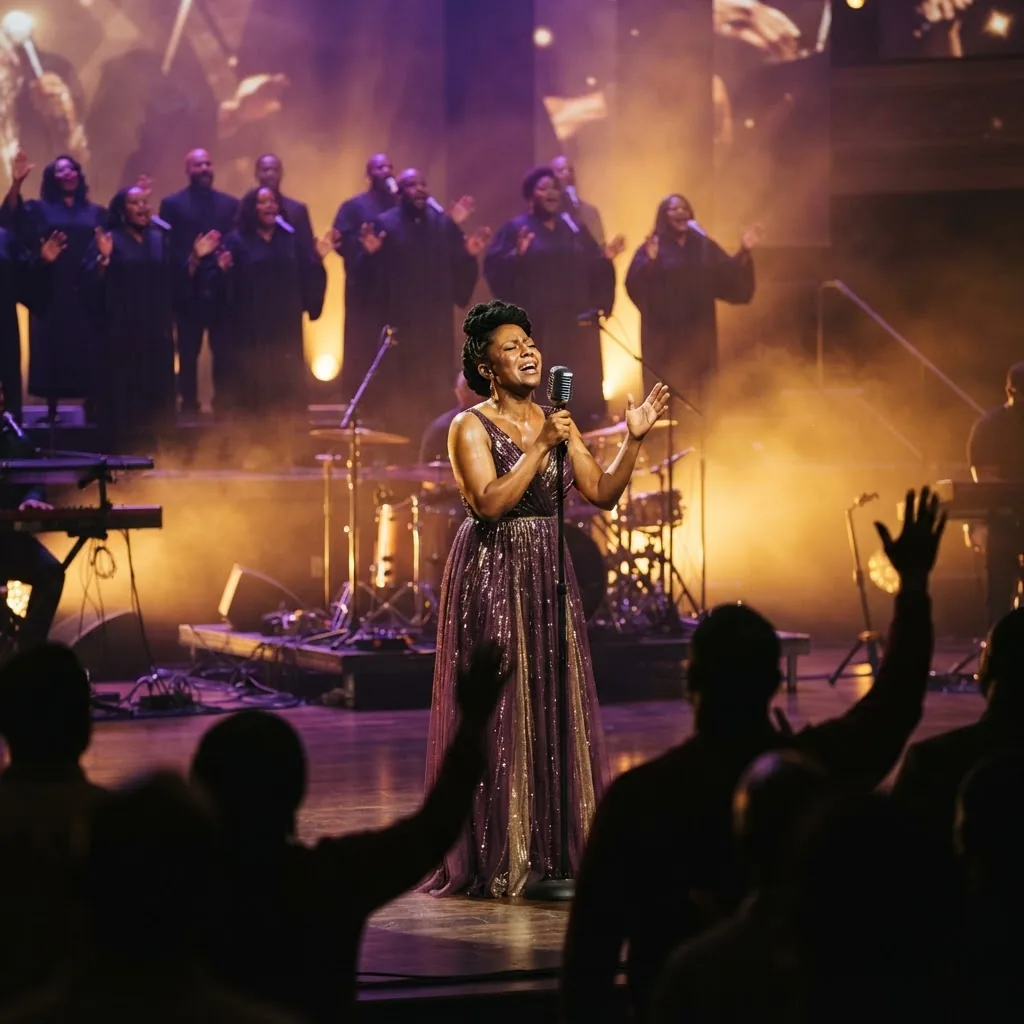
I have spent the last few days living inside TASHA UNSCRIPTED, the expansive new live album from Tasha Cobbs Leonard, and I can honestly say it is one of the most emotionally honest gospel records I have heard in years. Released on September 11, 2026, through Motown Gospel and Capitol Christian Music Group, this is not a tidy, radio-polished project. It is two and a half hours of unfiltered worship, recorded live in Atlanta, and it captures something that polished studio albums almost never do: the sound of a church family surrendering to the moment.
When a three-time GRAMMY winner, sixteen-time Stellar Award winner, and Billboard’s Gospel Artist of the Decade decides to strip the format down and simply minister, people notice. I noticed too, and I want to walk you through everything I found in this album — the story behind it, the collaborations that define it, the spontaneous moments that make it special, and why I believe it will be talked about for a long time.
Table of Contents
- What Is TASHA Unscripted?
- The Story Behind the Album
- My Track-by-Track Walkthrough
- The Collaborations That Define the Album
- The Spontaneous Moments
- The Unscripted Nights Tour
- Where It Fits in Gospel History
- How to Listen to TASHA Unscripted
- Final Thoughts
- Frequently Asked Questions
What Is TASHA Unscripted?
TASHA UNSCRIPTED is a 34-track live album spanning roughly two hours and thirty-four minutes. That number alone tells you this is not a conventional release. Most gospel albums settle for twelve to sixteen songs. Tasha Cobbs Leonard instead chose to give us the entire evening — songs, prayers, reprises, transitions, and every in-between moment that a live recording usually cuts away.
The album’s own title tells you the concept. “Unscripted” is the operative word. From the first minutes, it is clear that the structure exists only to serve the spirit of the night. Songs flow into one another. Reprises arrive when the room refuses to let a moment end. Some tracks are barely two minutes long, because that is how long the moment lasted. Others stretch well past conventional length, because the worship kept building.
I have written before about the essence of contemporary gospel music, and this album is almost a case study in that essence: tradition and modernity holding hands. You will hear the footprint of the Black church — the organ swells, the choir responses, the preaching-in-song cadences — sitting comfortably next to contemporary worship production.
The Story Behind the Album
The album was recorded live in Atlanta, and the city matters. Atlanta has become one of the most important gospel cities in America, a place where traditional choir culture, contemporary worship, and mainstream music industry infrastructure all overlap. Recording there gave the project a congregation rather than an audience — you can hear people responding, shouting, singing along, and at times drowning out the stage.
Tasha Cobbs Leonard herself has said that with this album she was very intentional about reaching back and revisiting some of the sounds and songs that helped build her foundation. That intentionality is audible everywhere. This is an artist at the height of her commercial power choosing to honor her roots instead of chasing trends.
For context on just how much power we are talking about: Cobbs Leonard is a three-time GRAMMY winner whose breakout ministry anthem “Break Every Chain” became a global worship standard. She has been named Billboard’s Gospel Artist of the Decade. When an artist with that résumé makes a live double-album of spontaneous worship, it is a statement about what she believes gospel music is actually for.
It also arrives at a meaningful moment. As I explored in my piece on the evolution of contemporary gospel music, the genre has spent the last two decades stretching — into R&B, hip-hop, pop, and even bluegrass influences. TASHA UNSCRIPTED feels like a deliberate pause in that stretching: a reminder that the center of the genre is still the gathered church, singing together in one room.
My Track-by-Track Walkthrough
Thirty-four tracks can feel intimidating, so I have organized my walkthrough by the album’s natural movements rather than listing every single track mechanically. Here is how I heard the record.
The Opening: Setting the Atmosphere
The album opens the way a live service opens — with atmosphere before songs. The early tracks establish the room: the choir warming, the band finding the pocket, Tasha’s voice entering like a prayer. What struck me immediately is how little editing seems to separate you from the event. This is not a live album that has been sanded down into a studio simulation. It breathes.
The Revisited Foundations
The next movement reaches back. Several moments on the album revisit songs and sonic textures that built Tasha’s foundation as a worshipper, and you can feel the reverence in her delivery. These are not re-recordings for nostalgia’s sake. They are re-encounters — an adult returning to the rooms that raised her, with a fuller voice and a deeper testimony.
The Anchor Songs
- “Smile” (with Jonathan Nelson) — a bright, declarative moment that lifts the room within seconds.
- “What A God” (with Jonathan Nelson) — simple theology delivered with maximum conviction; my personal early favorite.
- “You Know My Name” (with Le’Andria Johnson) — the pairing of the year, in my opinion. Two of the most distinctive voices in gospel, on one microphone stand.
- “Fill Me Up” (with Kierra Sheard) — the classic petition, restored to its original hunger.
- “This Is A Move” (with Dante Bowe) — spontaneous worship at its most electric.
- “Put A Praise On It / Hallelujah” (with Karen Clark Sheard) — a masterclass in passing the torch between generations.
- “Jesus In The Morning” (with Karen Clark Sheard) — traditional roots, contemporary fire.
- “Jesus Is The Only Way / Good Good Good” and “Never Lost My Praise / Running For My Life” (with Bishop S. Y. Younger) — medleys that feel like a Sunday service condensed into two tracks.
- “For Your Glory” (with Jonathan McReynolds) — perhaps the most intimate stretch of the whole album.
- “Confidence” (with Lisa Knowles) — a closing-movement reminder that worship is also resolve.
The Spontaneous Stretch
The album’s longest section is the “Unscripted” core itself. These are the moments where the setlist stops mattering — where the band follows the singer, the singer follows the room, and the room follows the Spirit. Titles like “Unscripted” and “God Responds” are not really songs in the conventional sense. They are documentation of what happened when the plan was abandoned.
The Closings and Reprises
The album ends the way live worship ends: gradually, in waves, with reprises arriving like aftershocks. I love this choice. Most records would cut the repetition. TASHA UNSCRIPTED understands that repetition is the point — the church has always known that singing something again is how you believe it more deeply.
A Quick Map of the Album’s Key Collaborations
| Track Moment | Guest | Why It Matters |
|---|---|---|
| “You Know My Name” | Le’Andria Johnson | Two of gospel’s most emotive voices on one song |
| “Fill Me Up” / “Kierra’s Prayer” | Kierra Sheard | A generational classic returned to its hunger |
| “Put A Praise On It / Hallelujah” | Karen Clark Sheard | Contemporary hit meets legendary twang and control |
| “Jesus In The Morning” | Karen Clark Sheard | Traditional hymn energy carried forward |
| “This Is A Move” | Dante Bowe | Spontaneous worship at full voltage |
| “For Your Glory” | Jonathan McReynolds | The album’s most tender, conversational stretch |
| “Smile” / “What A God” | Jonathan Nelson | Declarative praise with a veteran’s authority |
| “Confidence” | Lisa Knowles | A quiet, resolute closing statement |
The Collaborations That Define the Album
If the concept of TASHA UNSCRIPTED is community, the guest list is the proof. This is not a pop album’s strategy of stacking celebrity features. Every guest on this record carries a genuine relational or stylistic connection to the music being made.
Le’Andria Johnson: The Empathy Test
Any conversation about the most affecting vocalists in contemporary gospel includes Le’Andria Johnson, and “You Know My Name” (plus its reprise) shows exactly why. Her voice carries weather — struggle, survival, gratitude — and pairing it with Tasha’s creates the album’s most emotionally exposed few minutes. I have replayed this sequence more than any other part of the record.
Kierra Sheard and the Clark-Sheard Legacy
Hearing Kierra Sheard on “Fill Me Up” and then Karen Clark Sheard across two tracks is the album’s clearest statement about lineage. The Clark family’s influence on gospel — from The Clark Sisters through to Kierra’s own career — is a thread running through the entire genre. On TASHA UNSCRIPTED, the lineage isn’t discussed. It is demonstrated.
Dante Bowe and Jonathan McReynolds: The Contemporary Bridge
These are two artists who represent gospel’s newer guard — Bowe with his genre-blurring intensity, McReynolds with his songwriter’s restraint. Their presence connects the album to the generation of worshippers who came up listening to Tasha Cobbs Leonard, and the mutual respect is audible.
The Spontaneous Moments: Why “Unscripted” Is the Whole Point
Here is the thing I keep coming back to: spontaneity is not a production choice on this album — it is the thesis.
Gospel’s live tradition has always made room for the unplanned. The great live records of the genre — from decades of choir recordings to the modern worship movement — understood that the best moment on a Tuesday night recording is the one nobody scheduled. Somewhere along the way, though, the live album became a controlled product: recorded live, then edited into something safe.
TASHA UNSCRIPTED pushes back on that with real commitment. The album keeps the prayers. It keeps the transitions. It keeps the reprises, the shifts of direction, the moments where the band follows the singer into a new key because the room demanded it. When a track is essentially an extended moment of corporate worship, the album does not apologize for it — it presents it as the main course.
“Unscripted” does not mean unplanned. It means the plan surrendered to a greater purpose. That distinction is the heart of this album.
For a listener like me — someone who grew up on church recordings and now writes about contemporary gospel full time — this is the most persuasive version of the genre: technically excellent musicianship in service of something that cannot be manufactured.
The Unscripted Nights Tour: Taking the Moment on the Road
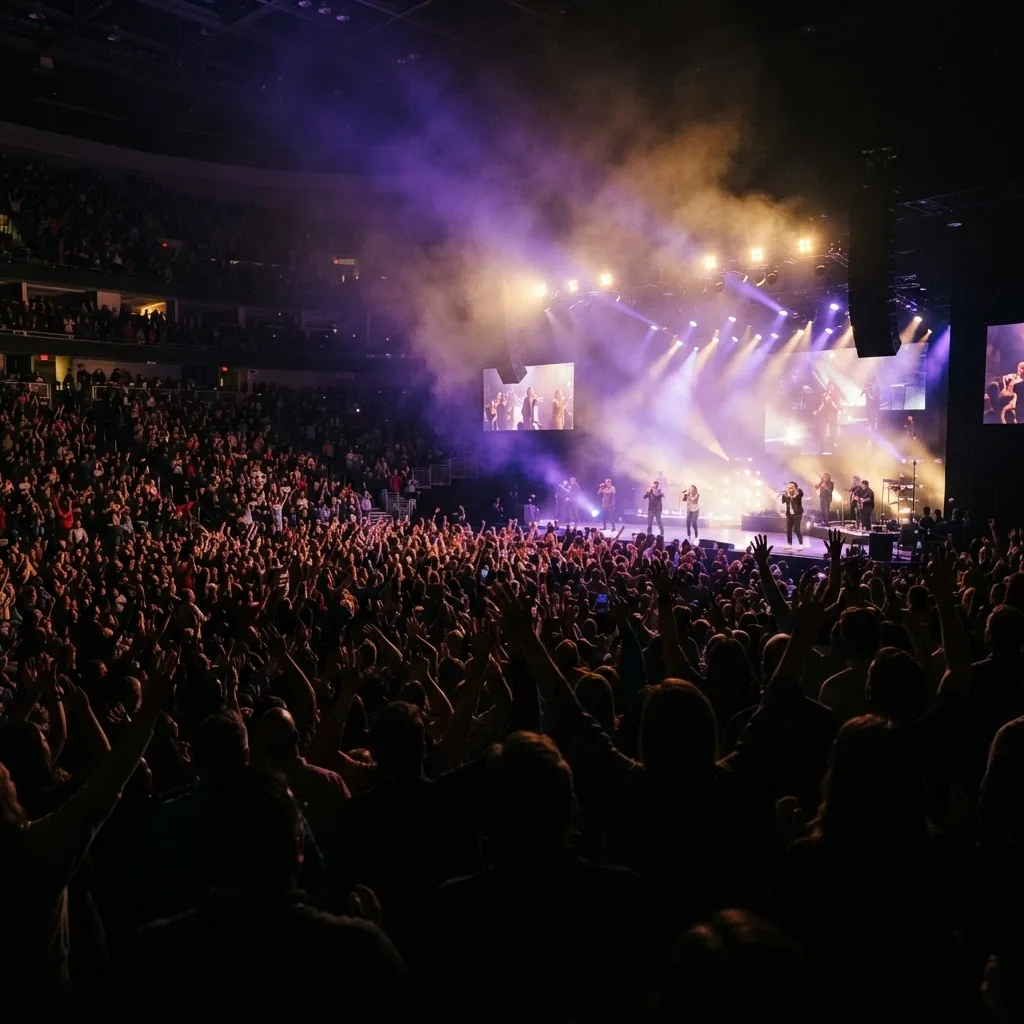
The album’s release is married to the Unscripted Nights Tour, a multi-city live worship experience that kicked off with a sold-out show in Charlotte, with dates announced including Brunswick, Atlanta, and Washington, D.C. The tour is the correct companion to this record for one simple reason: you cannot fully experience an unscripted album by reading about it. You have to be in the room.
If the tour passes through your area, my honest advice is to go. Live worship events of this caliber — where the artist has given herself permission to follow the moment — are rare, and the opening night selling out suggests the demand understands that too.
Where TASHA Unscripted Fits in Gospel History
Let me zoom out for a moment and place this album in the bigger picture, because I think its context matters.
Every era of gospel has a recording that defines its live spirit. The genre has always balanced two poles: the composed, arranged tradition (think of the great choir works) and the spontaneous, congregational tradition (the radio-era revivals, the summer conventions). Contemporary gospel has mostly lived in the composed pole for twenty years, borrowing from pop structures to reach streaming-era listeners.
TASHA UNSCRIPTED is a significant data point in the swing back toward the spontaneous pole. It will not be the last major artist to do this. Its commercial arrival — on a major label, backed by a national tour, weeks before the artist performs at the 57th GMA Dove Awards — signals that the industry believes there is a mass audience for unhurried, unedited worship. I think the industry is right, and I think the audience has been hungry for this longer than anyone knew.
It also sits interestingly beside the biggest industry story of the season: the entrance of Roc Nation Distribution into gospel, announced through Marvin Sapp’s forthcoming album Restoration. Where that story is about new business models reaching gospel, TASHA UNSCRIPTED is about the oldest model there is — a singer, a room, and the willingness to stay until the work is finished. You can read my full breakdown of the Marvin Sapp and Roc Nation story here.
How to Listen to TASHA Unscripted
Because the album is 34 tracks, I want to leave you with the listening advice I give friends:
- Do not shuffle it. The sequence is the architecture. Listen in order, at least the first time.
- Use good speakers or headphones. The room sound is part of the content. On earbuds you lose the congregation.
- Give it an evening, not a commute. Two and a half hours is a commitment, but it is the album’s actual format — like a service, it asks for presence.
- Listen for the transitions. Some of the best musical moments on the record happen between songs, not during them.
The album is available on all major streaming platforms, including Apple Music, and you can follow tour dates and ministry updates on Tasha Cobbs Leonard’s official website and the Unscripted Nights Tour site.
Tasha’s Vocal Performance: A Study in Restraint and Release
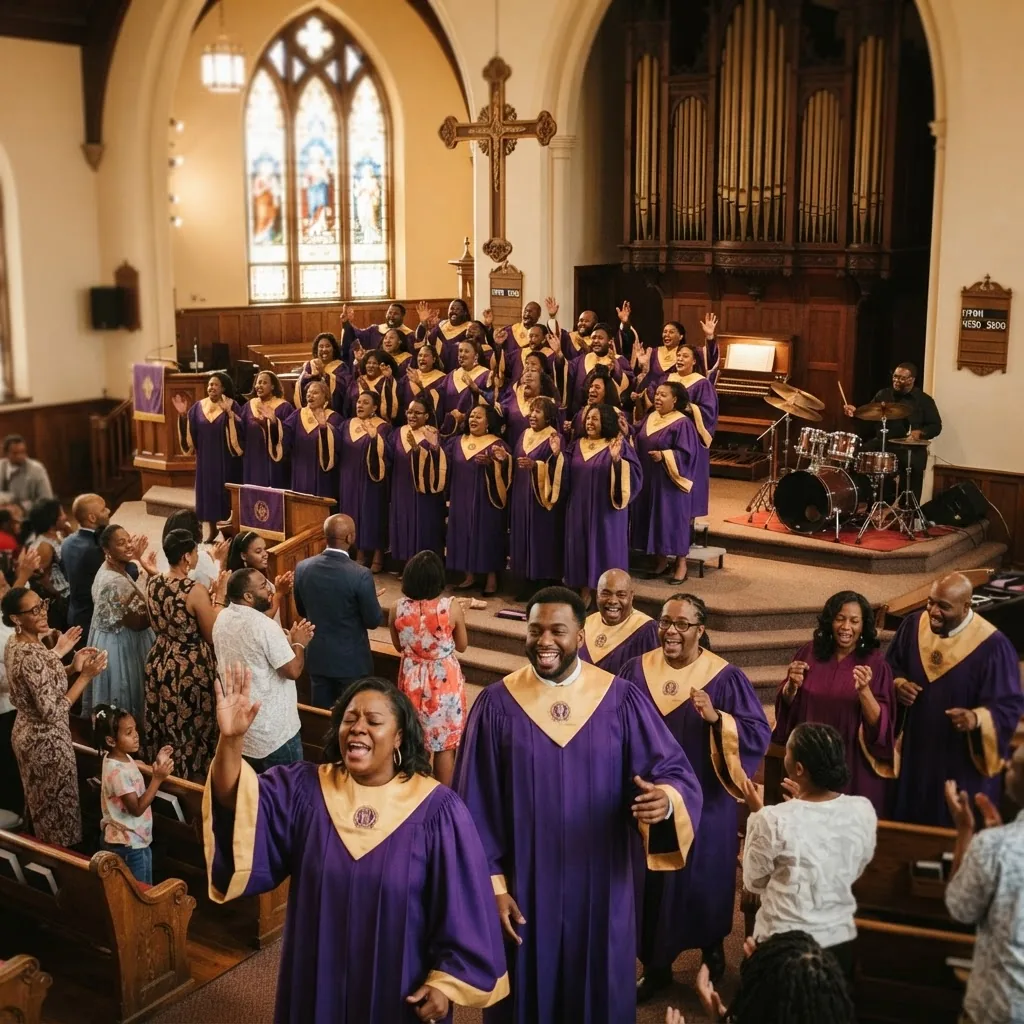
I want to spend a moment on the singing itself, because a project like this lives or dies on vocal leadership. Across thirty-four tracks, Tasha Cobbs Leonard does something that took me several listens to fully appreciate: she sings less than her reputation would suggest she could. That is a compliment.
There are moments — the peaks of “Put A Praise On It,” the bridges of the spontaneous stretch — where she goes fully to the summit, and they are breathtaking precisely because she did not pitch her tent there. Most of the album, she is a guide rather than a spectacle. She leaves space for the choir to answer, for the guests to testify, for the congregation to be heard. When the release finally comes, it lands with the weight of everything she withheld. That is a veteran’s instinct, and no amount of production can fake it.
Her tone has also matured beautifully. There is a warmth in the lower register now, a settledness in the midrange, and the trademark control at the top remains. But the most affecting moments, for me, are the conversational ones — the half-sung prayers, the moments where the melody dissolves into speech. That is where the album earns its title.
The Musicians and the Choir: The Unsung Heroes of the Night
A word for the people who made an unscripted album possible, because they deserve it. Spontaneity is the most demanding format in live music. A scripted show requires precision; an unscripted one requires attention — every musician watching the singer’s hands, her breath, the room’s temperature, ready to pivot in a heartbeat.
Throughout the record, the band demonstrates this beautifully. The rhythm section holds grooves that flex without breaking. The keys and organ players deserve special mention: gospel’s harmonic language lives in their hands, and they navigate modulation after modulation — often mid-sentence — without a stumble. The backing vocalists and choir are not decoration here; they are the architecture, the Greek chorus of the evening, answering and amplifying every declaration from the stage.
If you want a masterclass in what “tight but loose” means in gospel music, this album is currently the best example on the market. Listen once for Tasha, then listen again just for the band, and you will hear a second album hiding underneath the first one.
Final Thoughts: The Album Gospel Needed Right Now
TASHA UNSCRIPTED will not be for everyone. If you want tight three-minute singles, this album will test your patience, and honestly, that is fine — it was not made for that purpose. It was made to document what happens when one of this generation’s most decorated voices decides that the moment is more important than the format.
For me, the verdict is simple. This is the most alive gospel recording I have heard in a very long time. It is generous, it is rooted, it is communal, and it trusts the listener to sit inside a service rather than a product. Tasha Cobbs Leonard did not need to make this album. That she wanted to — that she gave us thirty-four tracks instead of twelve, reprises instead of edits, guests instead of features — tells you everything about what she believes this music is.
Highly, highly recommended. Listen once alone. Then listen again with someone you worship with.
Frequently Asked Questions About TASHA Unscripted
What is TASHA Unscripted?
TASHA Unscripted is a 34-track live album by Tasha Cobbs Leonard, released September 11, 2026, via Motown Gospel/Capitol Christian Music Group. It runs approximately two hours and thirty-four minutes and was recorded live in Atlanta.
Who features on TASHA Unscripted?
The album features Jonathan Nelson, Le’Andria Johnson, Kierra Sheard, Karen Clark Sheard, Dante Bowe, Bishop S. Y. Younger, Jonathan McReynolds, and Lisa Knowles across its key moments.
How long is the album?
The album spans 34 tracks and roughly 2 hours and 34 minutes of music, including reprises and spontaneous worship moments.
Is TASHA Unscripted a studio album?
No. It is a live album recorded in Atlanta, built around spontaneity, community, and in-the-moment worship rather than studio polish.
Where can I see Tasha Cobbs Leonard perform these songs live?
The Unscripted Nights Tour kicked off with a sold-out Charlotte show, with announced stops including Brunswick, Atlanta, and Washington, D.C. She has also been newly announced as a performer at the 57th Annual GMA Dove Awards on October 6, 2026, in Nashville.
Is the album good for new gospel listeners?
Yes — but listen to it as an experience rather than a playlist. If you are new to contemporary gospel, start with “What A God,” “You Know My Name,” and “Fill Me Up,” then go back and hear the full sequence in order.
Never Miss a Beat
Get gospel music news, new releases, artist highlights, worship content, curated playlists and inspirational stories delivered to your inbox.