The Essence of Contemporary Gospel Music
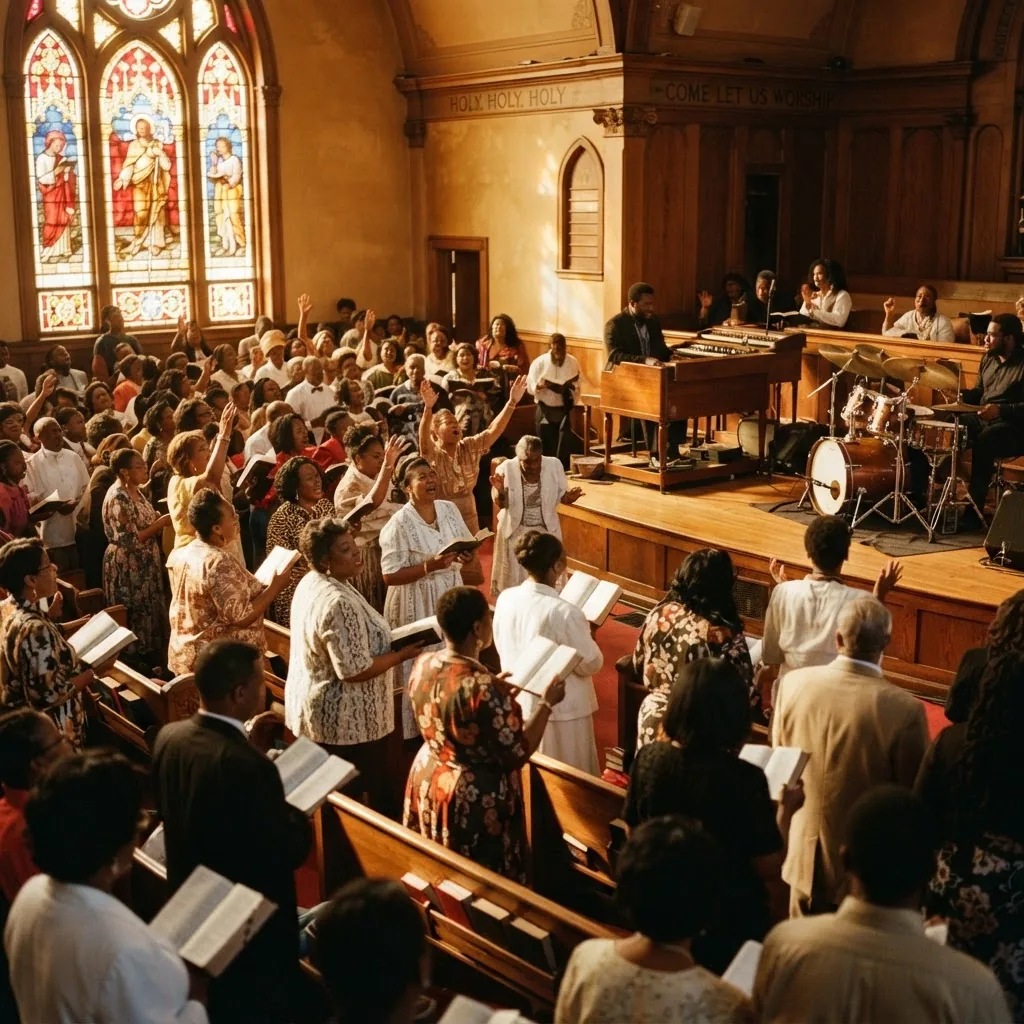
I still remember sitting in the third row of a packed auditorium years ago, feeling the low-end rumble of a Hammond B3 organ vibrate straight through the floorboards while a sixteen-piece choir unleashed a wall of harmony that gave me immediate goosebumps. That night was not just an incredible concert; it was a masterclass in the transformative power of contemporary gospel music, a dynamic genre that has spent decades breaking down stylistic walls without losing a single drop of its sacred soul. As someone who has spent a career analyzing melodies, studying chord structures, and interviewing worship leaders, I have always been fascinated by how this music touches the deepest corners of the human heart.
As a journalist who genuinely loves and lives this genre, I have watched contemporary gospel evolve from traditional church sanctuaries into global streaming playlists, arena-filling tours, and mainstream cultural milestones. In this comprehensive guide, I want to unpack what contemporary gospel music truly represents, trace its rich historical roots from early spirituals to modern urban beats, analyze its unique musical anatomy, and highlight the visionary pioneers who paved the way. Whether you are a lifelong believer, a curious music enthusiast, or a lover of rich vocal arrangements, I invite you to join me on this deep dive into the heart and sound of contemporary gospel.
Table of Contents

- What Contemporary Gospel Music Really Is
- Sacred Roots: From Spirituals to the Black Church
- The Evolutionary Bridge: Crossing Over Without Compromise
- Anatomy of the Sound: Musicality, Production, and Instrumentation
- Key Pioneers and Modern Icons of the Genre
- Contemporary Gospel vs. Praise & Worship: Distinctions and Overlaps
- Cultural Resonance and Global Reach
- How to Start Listening: A Guided Journey
- Conclusion: The Enduring Legacy and Future of Contemporary Gospel
- Frequently Asked Questions
What Contemporary Gospel Music Really Is
When people ask me to define contemporary gospel music, I often tell them to think of it as a bridge connecting sacred truth with contemporary culture. At its core, contemporary gospel is a vibrant musical genre that combines the theological message of Christian faith with modern musical styles like R&B, jazz, funk, hip-hop, pop, and orchestral arrangements. It retains the earnest devotion and emotional intensity of traditional church singing while embracing modern studio production, sophisticated chord progressions, and modern rhythms.
Unlike secular genres defined solely by instrumentation or tempo, contemporary gospel is defined primarily by its lyrical message and spiritual purpose. It speaks directly to human experiences—struggle, triumph, grief, joy, and redemption—through the lens of hope and divine love. Over the past several decades, I have seen this genre break out of regional church walls to captivate diverse audiences across every demographic, proving that authentic spiritual art transcends religious boundaries.
Defining the Core Sound and Identity
The core identity of contemporary gospel lies in its vocal freedom and harmonic sophistication. When you listen to a modern gospel track, you immediately notice intricate three-part choir harmonies, passionate lead vocals, and sudden dynamic shifts that elevate the emotional energy. The sound is rooted in the African American musical tradition, characterized by call-and-response structures, vocal embellishments known as melismas, and a deep rhythmic drive that keeps audiences moving.
Furthermore, contemporary gospel is defined by its willingness to innovate musically without compromising its spiritual message. Production styles range from full live big bands complete with brass sections to sleek studio tracks driven by synth bass and drum programming. In my experience reviewing albums, this flexibility is precisely what allows contemporary gospel to remain relevant, appealing to younger generations who crave modern sonics alongside meaningful, life-affirming lyrics.
How Modern Faith Meets Contemporary Soundscapes
Faith in the modern world is rarely static, and contemporary gospel music reflects that lived reality. Artists today write songs that address real-world challenges, including mental health battles, social justice struggles, personal doubts, and financial hardships. By pairing honest, reflective lyrics with modern soundscapes, gospel songwriters create a sanctuary where listeners feel understood and encouraged.
I have observed how contemporary gospel artists utilize contemporary studio tools to craft immersive auditory experiences. They seamlessly weave ambient synthesizers, atmospheric guitar reverbs, and punchy urban drum kits into traditional worship themes. This blending of contemporary soundscapes with ancient faith truths ensures that the gospel message remains fresh, urgent, and deeply accessible in today’s fast-paced digital culture.
Sacred Roots: From Spirituals to the Black Church
To fully appreciate contemporary gospel, one must understand the sacred soil from which it grew. The lineage of this music begins in the antebellum American South, where enslaved African Americans forged spirituals as expressions of faith, endurance, and covert communication. These early songs were born in secret praise houses and plantation fields, combining West African rhythmic heritage with Christian hymnody to create a powerful new oral tradition.
As the Great Migration carried millions of Black Americans from rural Southern towns into urban centers like Chicago, Detroit, and Philadelphia, their musical traditions transformed. The Black church became the social, spiritual, and artistic heartbeat of these communities, nurturing musicians who would redefine American popular music. If you want to explore how these early historical shifts paved the way for modern releases, I recommend reading our guide on exploring the evolution of contemporary gospel music.
The Crucible of Negro Spirituals and Work Songs
Negro spirituals were the foundational crucible of sacred African American music. Songs like “Swing Low, Sweet Chariot,” “Steal Away,” and “Deep River” contained dual meanings, expressing faith in ultimate spiritual deliverance while offering instructions for escaping along the Underground Railroad. The singing was communal, unaccompanied, and characterized by foot-stomping, hand-clapping, and soul-stirring vocal improvisation.
Work songs and field hollers contributed rhythmic drive and raw emotional expressiveness to this growing body of music. Scholars and musicologists, such as those documenting music history at the Library of Congress, have highlighted how these early vocal traditions embedded cadence and emotional urgency into sacred song. That unfiltered emotional honesty remains the lifeblood of contemporary gospel singing today.
The Early 20th Century: Thomas Dorsey and the Golden Era
In the 1930s, a former blues pianist named Thomas A. Dorsey revolutionized sacred music by blending blues chord progressions and jazz syncopation with Christian lyrics. Often celebrated as the “Father of Gospel Music,” Dorsey faced initial resistance from traditional church leaders who considered blues rhythms unfit for the sanctuary. However, his timeless compositions, such as “Precious Lord, Take My Hand” and “Peace in the Valley,” eventually won over congregations across the nation.
Dorsey’s work birthed the Golden Era of Gospel Music, spanning the 1940s through the 1950s. This glorious period saw the rise of legendary gospel quartets and soloists who established the vocal standards of the genre. The iconic sounds of The Dixie Hummingbirds, The Soul Stirrers featuring a young Sam Cooke, and Clara Ward set the gold standard for vocal passion, arrangement precision, and spiritual intensity.
Mahalia Jackson and the Sanctuary Sound
No discussion of gospel roots is complete without honoring Mahalia Jackson, often called the “Queen of Gospel Music.” Possessing a rich, booming contralto voice, Jackson refused to sing secular music, using her platform to bring gospel music to Carnegie Hall, international concert stages, and television broadcasts. Her powerful singing became the soundtrack of the Civil Rights Movement, inspiring millions as she performed alongside Dr. Martin Luther King Jr.
Jackson’s iconic performances demonstrated that gospel music possessed universal artistic and spiritual value. Her ability to convey profound reverence through soaring melodies laid the vocal blueprint for every gospel soloist who followed. When I listen to her historical recordings today, I am still struck by the incredible resonance and authority in her voice—a timeless standard that modern singers continue to study and emulate.
The Evolutionary Bridge: Crossing Over Without Compromise
By the late 1960s and 1970s, gospel music stood at a major creative crossroads. A new generation of musicians emerged, eager to connect sacred messages with the evolving sounds of soul, rock, pop, and funk. This era built an evolutionary bridge, allowing gospel music to cross over into mainstream culture and radio playlists without compromising its spiritual message.
This period proved that sacred art could be musically adventurous, radio-friendly, and culturally relevant. Innovators experimented with electrification, synthesizer arrangements, and secular rhythm sections, creating a sound that appealed to listeners far beyond Sunday morning church services. This crucial transition set the stage for the massive urban gospel boom that transformed the music industry during the 1990s and 2000s.
Andraé Crouch and the Jesus Music Revolution
Andraé Crouch and the Disciples were instrumental in bridging traditional gospel and modern pop music. During the late 1960s and 1970s, Crouch introduced pop melodies, contemporary vocal arrangements, and modern band instrumentation into sacred music. Hits like “My Tribute (To God Be the Glory),” “Through It All,” and “Soon and Very Soon” became beloved standards in both Black and white churches worldwide.
Crouch’s incredible versatility led him to work with mainstream pop icons like Michael Jackson and Madonna, arranging choral backings for hits like “Man in the Mirror.” His pioneering work earned him multiple Grammy Awards and proved that gospel writers could excel at the highest levels of global commercial music production while staying true to their sacred calling.
Richard Smallwood and the Classical-Gospel Synthesis
In the late 1970s and 1980s, Richard Smallwood introduced a groundbreaking sound by blending European classical composition techniques with traditional African American gospel harmonies. A trained classical pianist and Howard University graduate, Smallwood incorporated Bach-inspired counterpoint, elaborate choir voicing, and symphonic arrangements into his music.
His legendary masterpiece, “Total Praise,” stands as one of the most universally performed gospel songs in modern history. Smallwood demonstrated that contemporary gospel could possess symphonic grandeur and formal musical complexity while remaining deeply anointed and accessible. His classical-gospel synthesis expanded the artistic boundaries of sacred choral music forever.
The 1990s Revolution: Kirk Franklin and Fred Hammond
The 1990s brought a explosive earthquake to the genre, led by visionary artists like Kirk Franklin and Fred Hammond. Kirk Franklin revolutionized the industry in 1993 with his debut album *Kirk Franklin & The Family*, blending hip-hop beats, R&B hooks, and choir harmonies. His massive 1997 crossover hit “Stomp” featured Cheryl “Salt” James and became a staple on MTV and mainstream radio, bringing urban gospel into millions of households.
Simultaneously, Fred Hammond pioneered urban praise and worship with his group Radical for Christ. Hammond introduced funk basslines, smooth R&B chord progressions, and congregational singing style that redefined how churches sang praise music. Together, Franklin and Hammond established the modern template for contemporary gospel, proving that urban music styles could be used to glorify God.
Anatomy of the Sound: Musicality, Production, and Instrumentation
To truly understand why contemporary gospel music sounds so rich and powerful, one must examine its complex musical anatomy. The genre is renowned among professional musicians for possessing some of the most advanced harmonic structures and technical musicianship in modern music. From intricate organ chords to explosive drum fills, every element is designed to create a sense of dynamic progression and spiritual elevation.
When I analyze contemporary gospel arrangements in the studio, I am always struck by the incredible balance between structured composition and spontaneous improvisation. Musicians in this genre must possess exceptional ear training, agility, and dynamic control to respond to lead singers and shifting spiritual moods. Let us examine the core musical elements that give contemporary gospel its distinct audio signature.
Keyboards, Hammond B3, and Harmonic Complexity
At the center of almost every gospel band is the keyboard section, usually anchored by a grand piano, digital synthesizers, and the iconic Hammond B3 organ played through a rotating Leslie speaker cabinet. The Hammond B3 provides a warm, swelling sonic foundation that can shift from a gentle background hum during quiet moments to a roaring, overdrive-soaked crescendo during energetic shouting sections.
Harmonically, contemporary gospel is famous for its use of extended chords, secondary dominants, tritone substitutions, and smooth passing chords. Musicians frequently utilize major ninth, minor eleventh, and dominant thirteenth chords to create emotional tension and resolution. This harmonic depth gives gospel songs their signature plush, soul-stirring warmth that sets them apart from standard three-chord pop arrangements.
Rhythmic Foundations: Drums, Bass, and Modern Beat Production
The rhythm section in contemporary gospel is the engine that drives the music forward. Gospel drumming, often referred to in musician circles as “gospel chops,” is characterized by blazing drum fills, intricate hi-hat work, syncopated snare accents, and solid pocket playing. The drummer must master both tight pocket grooves and explosive linear fills that highlight vocal accents.
Bass playing in gospel music is equally impressive, utilizing slap bass techniques, walking basslines, synth bass layering, and deep low-end sub frequencies. In contemporary studio production, producers often blend live acoustic drums with 808 sub-bass drops and electronic drum samples. This fusion creates a punchy, modern low end that sounds amazing whether played over church sound systems, car stereos, or premium headphones.
Vocal Crafting: Choir Precision, Lead Passions, and Call-and-Response
Vocals are the crown jewel of contemporary gospel music. Choirs and praise teams are meticulously rehearsed to deliver razor-sharp dynamics, pristine diction, and rich three-part harmony (Sopranos, Altos, and Tenors). The blend of voices creates a massive sonic wall that can instantly elevate the mood of any room or recording.
Lead singers in contemporary gospel employ advanced vocal techniques, including soaring melismas (vocal runs), growls, falsetto shifts, and dynamic vocal placement. The ancestral tradition of call-and-response remains vital, creating an interactive dialogue between the lead vocalist, the supporting choir, and the audience. This vocal interplay creates an infectious energy that makes listeners feel like active participants rather than passive observers.
“Contemporary gospel music treats the recording studio as an altar and the stage as a sanctuary. It takes the highest standards of technical musical excellence and surrenders them entirely to a higher spiritual purpose.”
Key Pioneers and Modern Icons of the Genre
The story of contemporary gospel is written through the lives and artistry of legendary figures who dared to innovate. Each generation has produced visionary leaders who pushed musical boundaries while honoring the sacred core of the message. Below, I have cataloged some of the most influential pioneers and modern icons who shaped the genre into what it is today.
From early trailblazers like Mahalia Jackson to modern superstars like Tasha Cobbs Leonard, these artists have redefined global music culture. Their discographies represent the gold standard of spiritual songwriting, vocal performance, and creative production. If you want to dive deeper into recent landmark projects, check out our in-depth Tasha Cobbs Leonard ‘Unscripted’ album review for a look at modern worship songwriting at its finest.
To help you navigate these incredible figures and their legacies, I have compiled a detailed overview of key pioneers, their active eras, signature styles, and landmark compositions in the table below.
| Pioneer / Artist | Active Era | Key Musical Contributions | Defining Song / Album |
|---|---|---|---|
| Mahalia Jackson | 1930s–1970s | Pioneered traditional sanctuary gospel; brought gospel to global concert halls and civil rights movements. | “Move On Up a Little Higher” |
| Andraé Crouch | 1960s–2010s | Bridged contemporary pop, rock, and choir music; introduced modern song structures into worship. | “My Tribute (To God Be the Glory)” |
| Richard Smallwood | 1970s–Present | Synthesized European classical choral composition with traditional African American gospel harmonies. | “Total Praise” |
| Kirk Franklin | 1990s–Present | Revolutionized urban gospel by infusing hip-hop, R&B, and energetic staging into choir music. | “Stomp” / God’s Property |
| Fred Hammond | 1980s–Present | Pioneered urban praise and worship; integrated funk basslines and accessible congregational choruses. | “No Weapon” / Pages of Life |
| Yolanda Adams | 1980s–Present | Blended smooth jazz, adult contemporary pop, and gospel vocals; achieved massive mainstream radio crossover. | “Open My Heart” / Mountain High… Valley Low |
| CeCe Winans | 1980s–Present | Most awarded female gospel artist; mastered pop-gospel crossovers, duet performances, and timeless worship. | “Alabaster Box” / Believe For It |
| Marvin Sapp | 1990s–Present | Powerful vocal storyteller; crafted one of the biggest crossover gospel radio hits in billboard history. | “Never Would Have Made It” |
| Tasha Cobbs Leonard | 2010s–Present | Modern praise and worship powerhouse; fused congregational worship with energetic gospel brass and choir passion. | “Break Every Chain” / Heart. Passion. Pursuit. |
Each of these artists brought something distinct to the table. Yolanda Adams, with her stunning vocal range and smooth jazz sensibilities, proved that gospel could dominate mainstream adult contemporary airwaves with hits like “Open My Heart.” CeCe Winans, both as part of the legendary sibling duo BeBe & CeCe Winans and as a solo icon, established an unprecedented record of crossover success, earning 15 Grammy Awards while maintaining absolute grace and devotion.
Marvin Sapp captured the hearts of millions with “Never Would Have Made It,” a deeply personal ballad that spent a record-breaking 46 weeks at the top of the gospel radio charts. Meanwhile, modern titans like Tasha Cobbs Leonard continue to push the genre forward, packing arenas and recording massive worship anthems that bridge the gap between choir gospel and international praise movements. Their combined legacies demonstrate the incredible range and enduring strength of this musical tradition.
Contemporary Gospel vs. Praise & Worship: Distinctions and Overlaps
One question I frequently get from readers is how contemporary gospel differs from Praise & Worship (often associated with Contemporary Christian Music or CCM). While these two musical streams share the same underlying faith and often overlap on Sunday mornings, they possess distinct artistic origins, structural designs, and musical characteristics that are worth understanding.
Understanding these subtle distinctions helps listeners appreciate the rich diversity within Christian music. It also highlights how modern artists are increasingly dismantling these genre walls, creating a blended style that serves both personal listening enjoyment and congregational participation. Let us examine where these two beloved styles diverge and where they beautifully converge.
Defining the Boundaries: Artistic Expression vs. Congregational Design
Historically, contemporary gospel emphasizes complex vocal arrangements, dramatic narrative storytelling, and artistic performance. Songs are often written to highlight the extraordinary vocal dexterity of lead singers and the intricate harmony of backing choirs. Gospel arrangements feature frequent key changes, dynamic vocal solos, and rhythmically complex vamps designed to build intense emotional climaxes.
In contrast, traditional Praise & Worship music is specifically designed for immediate congregational singing. The melodies are typically simpler, kept within a comfortable vocal range for average churchgoers, and built on repetitive chorus structures. While gospel songs often tell a story of personal triumph or struggle, praise songs tend to focus on direct, vertical declarations of praise addressed directly to God.
The Convergence: How Modern Artists Bridge Both Worlds
In recent years, I have documented a fascinating convergence where the line between contemporary gospel and worship music has blurred significantly. Modern gospel artists like Tasha Cobbs Leonard, Israel Houghton, and Maverick City Music have mastered the art of creating songs that possess the harmonic soul of gospel while remaining easily singable for Sunday morning congregations.
This convergence has created a global worship movement where diverse musical styles celebrate together. Major award platforms now routinely honor these cross-genre collaborations. If you want to see how industry bodies celebrate this modern fusion of talent, read our comprehensive coverage in the 57th GMA Dove Awards 2026 guide. Organizations like the Gospel Music Association continue to play a crucial role in bringing these diverse sacred music communities together.
Cultural Resonance and Global Reach
The cultural impact of contemporary gospel music extends far beyond the sanctuary. It has served as the quiet, influential engine behind modern secular music for over a century. From pop icons to R&B royalty and hip-hop producers, countless mainstream artists received their foundational musical training in the Black church under the influence of gospel choir directors and organists.
Moreover, contemporary gospel has become a global phenomenon, finding enthusiastic audiences in Africa, Europe, Latin America, and Asia. Its universal themes of hope, resilience, and spiritual freedom resonate deeply across language and cultural divides, proving that genuine soul music speaks directly to the human spirit regardless of geography.
Influence on Mainstream Pop, R&B, and Hip-Hop
It is virtually impossible to imagine modern R&B, soul, or pop music without the influence of gospel training. Legendary vocalists such as Whitney Houston, Aretha Franklin, Stevie Wonder, and Beyoncé built their vocal strength, agility, and emotional authority in church gospel choirs. The melismatic vocal runs and passionate delivery that dominate modern pop music were directly refined in gospel sanctuaries.
In hip-hop production, gospel samples and chord progressions have fueled landmark projects, from Kanye West’s *Jesus Is King* and Chance the Rapper’s *Coloring Book* to Kendrick Lamar’s soulful instrumentals. Historical music institutions, such as the National Museum of African American Music, preserve and showcase how gospel chord structures provided the harmonic DNA for jazz, rhythm and blues, and rock and roll.
A Global Sanctuary: International Adoption and Cultural Exchange
Today, contemporary gospel is a thriving international movement. In countries across West and South Africa—such as Nigeria and South Africa—artists like Sinach, Nathaniel Bassey, and Benjamin Dube produce contemporary gospel projects that reach millions globally. They combine local rhythmic traditions and native languages with modern gospel production, creating a rich cross-cultural dialogue.
International recognition from institutions like the Grammy Awards has helped elevate global gospel creators onto world stages. As a music journalist, I find it incredibly inspiring to watch an arena in London, Lagos, or Sao Paulo sing the exact same gospel choruses with absolute unity, demonstrating the incredible unifying power of sacred music.
How to Start Listening: A Guided Journey
If you are new to contemporary gospel music, diving into a genre with nearly a century of recorded history can feel overwhelming. To help you begin your musical journey, I have curated a structured list of essential entry points, categorizing key projects and iconic tracks across three distinct eras of modern gospel development.
I recommend listening to these records with high-quality headphones or a good sound system so you can fully appreciate the subtle keyboard voicings, deep basslines, and layered vocal arrangements. Here is your guided starter roadmap:
- The Golden Foundations (1950s–1970s):
- Mahalia Jackson – Live at Newport 1958: Experience the raw authority and grandeur of traditional sanctuary gospel singing live.
- Andraé Crouch & The Disciples – Live in London (1978): A landmark album showcasing the birth of pop-infused contemporary worship.
- The Edwin Hawkins Singers – “Oh Happy Day” (1969): The iconic gospel crossover single that changed radio history forever.
- The Urban Gospel Revolution (1990s–2000s):
- Kirk Franklin & The Family – Self-Titled (1993): The groundbreaking debut that brought hip-hop energy and choir harmonies together.
- Fred Hammond & Radical for Christ – Pages of Life: Chapters I & II (1998): The ultimate masterclass in urban praise and worship basslines.
- Yolanda Adams – Mountain High… Valley Low (1999): A beautifully produced blend of smooth adult contemporary pop, jazz, and gospel vocals.
- Modern Praise & Contemporary Icons (2010s–Present):
- Tasha Cobbs Leonard – Heart. Passion. Pursuit. (2017): An immersive studio project blending arena worship, choir power, and urban beat production.
- CeCe Winans – Believe For It (2021): A majestic live worship recording proving why CeCe remains the undisputed queen of gospel vocals.
- Maverick City Music – Jubilee: Juneteenth Edition (2021): A vibrant demonstration of modern communal worship and spontaneous song creation.
Conclusion: The Enduring Legacy and Future of Contemporary Gospel
Contemporary gospel music is far more than a commercial radio format or a genre category on a streaming platform; it is a living, breathing testimony to the human spirit’s eternal quest for hope, faith, and connection. From its humble origins in field spirituals and neighborhood churches to its current status as a global cultural juggernaut, gospel music has continually adapted to new musical landscapes without losing its foundational sacred soul.
As I reflect on the evolution of this genre, I am filled with excitement for its future. Younger generations of songwriters, producers, and vocalists are constantly discovering new ways to blend modern beats, ambient textures, and global rhythms with timeless spiritual truths. So long as human beings experience joy, face trials, and seek comfort, contemporary gospel music will continue to sing us home, offering a sanctuary of light and harmony in an ever-changing world.
Frequently Asked Questions
What is the main difference between traditional and contemporary gospel music?
Traditional gospel music relies heavily on acoustic instrumentation, traditional choir arrangements, piano, Hammond organ, and hymns rooted in early 20th-century church traditions. Contemporary gospel integrates modern musical styles—such as R&B, hip-hop, funk, jazz, and pop—featuring electronic production, modern synth layering, and sleek studio recording techniques while maintaining Christian theological lyrics.
Who is considered the father of contemporary gospel music?
While Thomas A. Dorsey is universally recognized as the “Father of Gospel Music” for blending early blues with sacred lyrics, Andraé Crouch is widely regarded as the pioneer of contemporary gospel music. Crouch revolutionized the genre in the 1960s and 1970s by introducing pop melodies, contemporary band arrangements, and radio-friendly song structures that bridged sacred and secular audiences.
Can contemporary gospel music include hip-hop, R&B, or jazz elements?
Yes, absolutely. Contemporary gospel is defined by its lyrical content and spiritual purpose rather than a rigid musical style. Artists like Kirk Franklin, Lecrae, and Fred Hammond have successfully integrated hip-hop drum programming, R&B vocal arrangements, and complex jazz harmony into gospel music, making it one of the most musically diverse genres in the world.
What is the difference between contemporary gospel and Christian Contemporary Music (CCM)?
While both genres express Christian faith, contemporary gospel originates primarily from the African American church tradition, featuring rich choir harmonies, call-and-response vocals, Hammond organ arrangements, and urban rhythm sections. CCM developed predominantly from folk and pop-rock traditions, focusing more on acoustic guitars, synth-pop arrangements, and congregational praise band instrumentation.
Why is the Hammond B3 organ so important in gospel music?
The Hammond B3 organ, particularly when paired with a Leslie rotating speaker, provides the iconic sonic foundation of gospel music. Its rich harmonic drawbar tones, warm tube drive, and expressive swell pedal allow organists to sustain long vocal chords, add rhythmic bass lines, and create dynamic emotional swells that support lead singers and choirs during live worship.
Which contemporary gospel songs are best for beginners to listen to first?
Great starter songs for beginners include “Stomp” by Kirk Franklin, “Break Every Chain” by Tasha Cobbs Leonard, “Total Praise” by Richard Smallwood, “Open My Heart” by Yolanda Adams, “No Weapon” by Fred Hammond, and “Believe For It” by CeCe Winans. These iconic tracks provide a perfect overview of the genre’s vocal passion, melodic beauty, and dynamic production.
You Might Also Like
Marvin Sapp's Restoration: Why the Roc Nation Deal Changes Gospel Music Forever
Every so often, a business headline is really a culture story — and the news that Bishop Marvin…
Sep 12, 202657th GMA Dove Awards 2026: Complete Guide to Gospel's Biggest Night in Nashville
The first week of October is about to become the biggest week of the year for Christian and…
Sep 12, 2026Exploring the Evolution of Contemporary Gospel Music
As a lifelong lover of sacred music and a dedicated gospel journalist, I still get goosebumps every time…
Never Miss a Beat
Get gospel music news, new releases, artist highlights, worship content, curated playlists and inspirational stories delivered to your inbox.